
Key Takeaway
- The EU Battery Regulation (EU 2023/1542) is a legally binding law already in force since February 2024, covering all batteries sold in the EU regardless of where they are made.
- From raw material sourcing and manufacturing to labeling, recycling, and end-of-life handling, the EU Battery Regulation governs the entire battery lifecycle.
- Key requirements include carbon footprint declarations, recycled content minimums, strict substance limits, and a mandatory digital Battery Passport rolling out through 2036.
- Non-compliance means being barred from the EU market entirely, with consequences including product seizures and forced withdrawals.
- LEAD‘s end-to-end production solutions can help manufacturers meet EU compliance requirements for better battery manufacturing.
The global battery industry is at an inflection point. According to the European Commission, global battery demand is set to increase about 14 times by 2030, with the EU alone accounting for 17% of that demand.
But with explosive growth comes serious responsibility. Battery supply chains span continents, raising environmental and human rights concerns about the sourcing of raw materials. Improper disposal threatens ecosystems, and carbon-intensive production processes undermine the climate goals batteries are supposed to help achieve. Also, inconsistent product standards across markets pose risks to consumers and businesses.
Regulatory compliance is becoming as critical as technological innovation and cost efficiency. The EU Battery Regulation represents a major shift in how batteries are designed, manufactured, and brought to market across Europe. It takes a full lifecycle approach (covering design, manufacturing, use, and recycling) to enforce strict sustainability and safety standards.
Battery manufacturers and supply chain operators need to understand this structural transformation, which is changing market access and competitiveness in Europe.
What is the EU Battery Regulation, Specifically?
1. Legal Basis and Timeline
The EU Battery Regulation is formally known as Regulation (EU) 2023/1542. It was published in the Official Journal of the European Union on 28 July 2023 and officially entered into force on 17 August 2023, with mandatory enforcement beginning on 18 February 2024. This landmark legislation replaces the outdated Battery Directive 2006/66/EC, which was fully repealed by 18 August 2025. Today, the new regulation has become the sole legal reference for batteries in the EU.
The transition is being managed in phases. The various requirements will come into effect incrementally between 2024 and 2036. This would give manufacturers time to adapt, but the deadlines are firm.
2. Scope of the Regulation
The EU Battery Regulation applies to all new batteries placed on the EU market — regardless of where they are manufactured or where the raw materials originate. It covers five distinct battery categories.
Category 01
Portable Batteries
Batteries used in everyday consumer electronics — including those sealed inside devices such as smartphones, laptops, and household appliances.
Category 02
Electric Vehicle (EV) Batteries
Traction batteries powering both passenger cars and commercial vehicles — one of the highest-priority categories given the scale of the EU’s EV transition.
Category 03
Light Means of Transport (LMT) Batteries
Batteries used in lighter electrically powered vehicles, treated as a separate category from full EVs.
E-mopeds
E-scooters
Similar devices
Category 04
Industrial Batteries
Batteries designed for industrial applications — including large-scale stationary energy storage systems used in power grids and commercial facilities.
Category 05
Starting, Lighting, and Ignition (SLI) Batteries
The conventional lead-acid batteries found in traditional combustion-engine vehicles, used to start the engine and power onboard electrics.
The only exclusions are batteries used in military, aerospace, and nuclear applications. For everyone else in the battery value chain (manufacturers, importers, distributors, and assemblers), this regulation is relevant and legally binding.
3. Core Objectives
The EU Battery Regulation is built around four interconnected goals that highlight the EU’s broader industrial and environmental policy ambitions:
Sustainable Battery Life Cycle
The regulation cares beyond the moment a battery hits the shelf. It governs the environmental impact of a battery from raw material extraction right through to disposal.
Circular Economy for Batteries
The regulation sets mandatory recycled content targets and collection rates. From August 2031, batteries must meet minimum recycled-material percentages:
Minimum recycled content targets (from August 2031)
| Material | Minimum % |
|---|---|
| Cobalt | 16% |
| Lead | 85% |
| Lithium | 6% |
| Nickel | 6% |
Reducing Environmental and Social Impacts
Companies must conduct due diligence on the origins of their key raw materials and take steps to address risks of human rights abuses or environmental harm.
Strategic Autonomy for Critical Raw Materials
Europe knows it’s been too dependent on a small number of countries for battery materials. This regulation is addressing that by pushing to build stronger domestic supply chains and backing European battery companies to reduce exposure to geopolitical risk.
Key Requirements for Battery Manufacturing Under the EU Battery Regulation
The EU Battery Regulation sets out various requirements for businesses involved in battery manufacturing or supplying manufacturing equipment to companies serving the European market.
Below are some of the key requirements that will shape your production processes and compliance programs:
1. Design and Safety / Substance‑Restrictions Requirements
Substance Limits
From Feb 18, 2024
All battery types are subject to strict chemical ceilings:
| Substance | Battery Type | Max. Limit | Effective |
|---|---|---|---|
| Mercury | All types | 0.0005% | Feb 2024 |
| Cadmium | Portable (excl. emergency & medical) | 0.002% | Feb 2024 |
| Lead | Portable | 0.01% | Aug 2024 |
SVHC Substances
REACH Candidate List
Batteries containing Substances of Very High Concern (SVHC) listed under the EU REACH Regulation’s Candidate List are subject to additional information obligations. Chemicals such as N-methyl pyrrolidone (NMP), commonly used in battery manufacturing, may trigger regulatory reporting requirements.
Durability & Performance Classes
Phased in 2027–2028
Minimum durability and performance standards will be phased in progressively:
Rechargeable industrial
From Aug 18, 2027
Portable batteries
From Aug 18, 2028
Stationary Battery Energy Storage Systems (SBESS)
From Aug 18, 2024
SBESS must pass specific safety tests demonstrating safe operation under defined conditions. Full technical documentation must prove safety performance before the product can enter the market.
Removability and Replaceability
From Feb 18, 2027
Rules differ depending on battery type and user:
Battery Management System (BMS)
Every BMS must include a software reset function. This enables economic operators to prepare batteries for reuse or remanufacturing — a key requirement supporting the circular economy objectives of the regulation.
Reassessing Substance Restrictions
By Dec 31, 2027
The European Commission is required to submit a report by the end of 2027 assessing whether substance restrictions should be extended to additional chemicals of concern not currently covered by the regulation.
2. Manufacturing and Process Control Requirements
The EU Battery Regulation requires manufacturers to prove that their production processes and supply chains are transparent and socially/environmentally responsible. Manufacturers are now required to generate and present reliable technical data that demonstrates that their batteries meet the required parameters. So, the quality and consistency of manufacturing processes are becoming compliance obligations with legal consequences. The key manufacturing and process control requirements are:
Requirement 01
Supply-Chain Due Diligence
Operators must establish and document due diligence policies consistent with OECD/UNEP guidance, covering identification and mitigation of environmental and human rights risks in the sourcing of cobalt, lithium, nickel, graphite, and similar minerals.
Requirement 02
Technical Documentation
Manufacturers must compile comprehensive technical documentation per Annex VIII of the regulation, covering all applicable product requirements. It must be kept up to date and made available to market surveillance authorities on request.
Requirement 03
From Aug 18, 2024
Electrochemical Performance and Durability Data
Rechargeable industrial batteries above 2 kWh, LMT batteries, and EV batteries must be accompanied by documentation declaring values for electrochemical performance and durability parameters.
Requirement 04
Measurement and Testing Methods
All values declared in technical documentation must be based on accurate, reproducible testing methods. Estimation or approximation is not permitted — manufacturers must substantiate every declared figure.
Requirement 05
Recyclability and Disassembly
Batteries must be designed to facilitate maintenance and safe disassembly for recycling. Technical documentation must demonstrate that design choices actively support end-of-life handling.
Additional obligations address the performance of general-use portable batteries, the future of non-rechargeable batteries, and the responsibilities of all economic operators across the supply chain.
Rule 01
From Aug 18, 2028
General-Use Portable Batteries
General-use portable batteries (other than button cells) must meet the durability and electrochemical performance standards set by the applicable delegated acts.
Rule 02
Assessment by Dec 31, 2030
Non-Rechargeable Portable Batteries
The European Commission will assess the feasibility of phasing out non-rechargeable portable batteries entirely. A decision on this phase-out is expected by the end of 2030.
Rule 03
Importer and Distributor Obligations
All economic operators in the supply chain must carry out two verifications before placing batteries on the market:
Verification 1
Confirm that the manufacturer has completed the applicable conformity assessment procedure.
Verification 2
Confirm that batteries are accompanied by all required compliant documentation before market entry.
Process control is the manufacturing backbone of regulatory compliance under the EU Battery Regulation. Therefore, manufacturers must treat regulatory compliance as an operational discipline to maintain access to the EU market.
3. Carbon Footprint and Sustainability in Production
For the first time in any product category, the EU is making carbon footprint declarations and performance classifications mandatory, along with maximum threshold limits. This means that eventually a battery with too large a carbon footprint will be legally prohibited from the EU market.
Requirement 01
Carbon Footprint Declaration
A declaration covering the full life cycle — raw material extraction, cell production, module assembly, use phase, and end-of-life — is mandatory for the following battery types:
| Battery type | Mandatory from |
|---|---|
| EV batteries | Feb 18, 2025 |
| Rechargeable industrial batteries above 2 kWh | Feb 18, 2026 |
| LMT batteries | Feb 18, 2027 |
Requirement 02
From 2026
Carbon Footprint Performance Classes
Applicable batteries must be labeled with a carbon footprint performance class. The European Commission will review and update the classification thresholds every three years to reflect improvements in manufacturing efficiency.
Requirement 03
Maximum Carbon Footprint Thresholds
Batteries exceeding defined maximum life-cycle carbon footprint limits will be prohibited from entering the EU market. Thresholds will be set by delegated acts. For EV, LMT, and industrial batteries, verification must be carried out by a notified body using Module D1.
Requirement 04
Calculation Methodology
Carbon footprint must be calculated using a life-cycle assessment (LCA) approach in accordance with the Product Environmental Footprint (PEF) framework. The four life-cycle stages below must all fall within the defined system boundary:
Manufacturing
Use phase
End-of-life
Requirement 05
From Aug 18, 2031 & 2036
Recycled Content Requirements
Industrial batteries above 2 kWh, EV batteries, and SLI batteries must meet minimum recycled content thresholds — with targets rising in two phases:
| Material | From Aug 2031 | From Aug 2036 |
|---|---|---|
| Cobalt | 16% | 26% |
| Lead | 85% | 85% |
| Lithium | 6% | 12% |
| Nickel | 6% | 15% |
Requirement 06
From Aug 18, 2028
Recycled Content Documentation
Technical documentation must demonstrate the actual percentages of recycled materials used — whether derived from manufacturing waste or post-consumer waste — for each applicable battery.
Requirement 07
Until Feb 18, 2027
Carbon Footprint Accessibility
Until carbon footprint data becomes accessible via QR code from February 18, 2027, the declaration must be physically provided with the battery at the point of sale.
4. Labeling, Information, Traceability, and the Battery Passport
Information transparency is a foundation of the EU Battery Regulation. The regulation introduces a layered information architecture, including physical labels, QR-code-linked digital content, Battery Passport, and more.
From
Aug 18
2024
CE Marking
CE marking must be affixed visibly to each battery — or to packaging and accompanying documents where physically impractical.
From
Aug 18
2025
Separate Collection Symbol
All batteries must carry the “crossed-out wheelie bin” symbol. Batteries containing more than 0.002% cadmium or 0.004% lead must add the chemical symbol (Cd or Pb) beneath it.
From
Aug 18
2026
General Label Information
All batteries must display a label containing 10 mandatory items — including manufacturer details, battery type, chemical composition, hazardous substances beyond lead, cadmium, and mercury, and any critical raw materials present.
Capacity Labeling
Rechargeable portable, LMT, and SLI batteries must display capacity information. Non-rechargeable portable batteries must indicate minimum average continuous discharge time and be marked as “non-rechargeable”.
From
Feb 18
2027
Carbon Footprint Label
EVs, LMTs, and rechargeable industrial batteries above 2 kWh must display their declared carbon footprint performance class visibly on the label.
QR Code
All applicable batteries must carry a QR code providing digital access to the conformity declaration, carbon footprint data, recycled content information, and other mandatory details.
Battery Passport
Mandatory for LMT batteries, rechargeable industrial batteries above 2 kWh, and EV batteries. The passport must include:
Full material composition
Recycled content percentages
Performance & durability parameters
Supply chain due diligence evidence
Second-life suitability information
Access tiers
Passport data is structured for different audiences. Some information is publicly accessible; other data is restricted to notified bodies and the Commission. Access for parties with a legitimate interest — such as recyclers or second-life operators — is also defined.
Retention period
The passport must remain accessible for at least 10 years after the last unit of a battery model is placed on the market. Manufacturers must also ensure data continuity in the event of business insolvency.
The Battery Passport is the EU’s boldest info requirement yet. Manufacturers need verified data across the entire battery lifecycle, which means they need a smart and connected system to remain compliant with this regulation
Electronic Registration
LMT, EV, and industrial batteries above 2 kWh must be electronically registered in a centralized EU database.
5. Conformity Assessment and Market Entry Procedures
The EU Battery Regulation establishes a structured path to the European market. No battery may be sold in the EU without completing the applicable conformity assessment and obtaining CE marking. It is a legal prerequisite for market access, and failure to comply exposes manufacturers, importers, and distributors to major enforcement action, including product seizures and market withdrawal orders.
Conformity Assessment Obligation
From Aug 18, 2024
All economic operators placing batteries on the EU market must complete the applicable conformity assessment procedure before doing so. The specific procedure depends on the battery type and the requirements being assessed.
Self-Certification
Available for portable batteries and industrial batteries below 2 kWh. The manufacturer:
Prepares required technical documentation
Issues an EU Declaration of Conformity
Affixes CE marking on the basis of its own assessment
Notified Body Involvement
Mandatory for LMT, EV, SLI batteries, and industrial batteries above 2 kWh. Module D1 applies for carbon footprint and recycled content requirements — requiring the manufacturer’s quality assurance system to be assessed and surveilled by the notified body.
EU Declaration of Conformity
Confirms compliance with Articles 6–10, 12, 13, and 14
Must be drawn up in electronic format
Translated into the language(s) of the member state(s) where the battery is sold
Must be kept up to date as requirements evolve
Multiple Notified Bodies
A manufacturer may use different notified bodies for different sections of the Declaration of Conformity, as confirmed by the European Commission. This provides flexibility where multiple technical assessments are required.
Technical Documentation
Must be compiled in accordance with Annex VIII and retained by the manufacturer for inspection. It must include all data needed to demonstrate compliance with all applicable requirements.
CE Marking Display Rules
Affixed before the battery enters the market
Must be visible and legible
May be placed on packaging if impractical on the battery itself
Notified body’s ID number must be included where applicable
Importer Verification
Verify the manufacturer has completed the conformity assessment
Confirm documentation is in order and CE marking is correctly applied
Must not place batteries on the market if non-compliance is suspected
Market Surveillance
EU member states designate market surveillance authorities with powers to inspect and withdraw products. Products found to be non-compliant can be seized from the market.
Carbon Footprint Labeling Addition
From 2026
From 2026, CE markings and conformity documentation must progressively incorporate carbon footprint performance class information for applicable battery types.
Conformity assessment is the final gate between production and the European market. It is far easier to pass through that gate if everything before it has been done correctly. So, the conformity assessment framework is a test of the entire manufacturing operation.
So, How Should the Battery Manufacturing Industry React?
The EU Battery Regulation is not a future concern. It is an active law with real deadlines. Plus, new obligations are being imposed on a rolling basis until 2036. Compliance and competitiveness are not in conflict here. A battery with a verified low carbon footprint, a complete digital passport, and documented performance data has become a stronger product in the eyes of European businesses and regulators.
So, manufacturers who invest in meeting it early will find themselves ahead of those who treat it as a last-minute checkbox exercise. Meeting these requirements demands more than good intentions. It demands intelligent manufacturing infrastructure in which production lines capture real-time process data, maintain consistent cell performance, support energy efficiency, and generate traceability records.
The solution
LEAD — Production partner for the European market
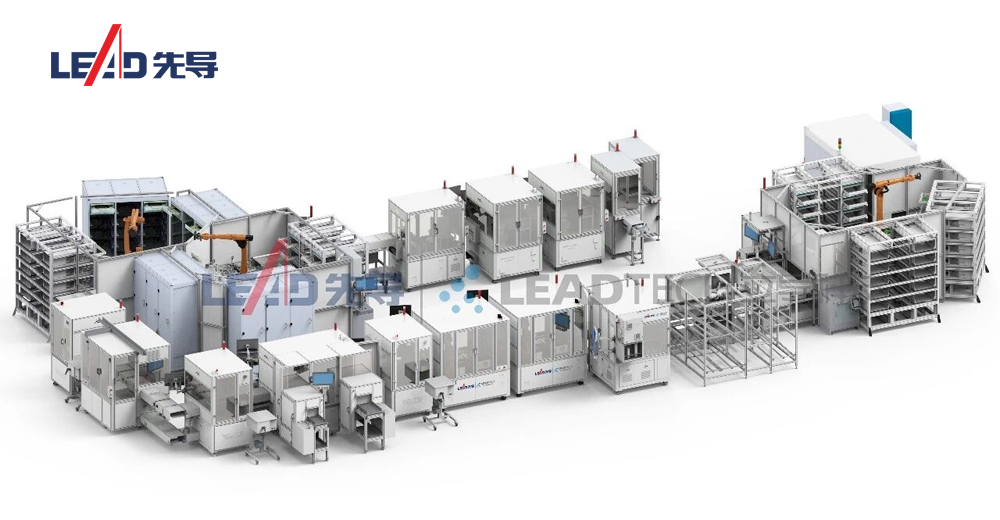
For all that, LEAD is the solution battery manufacturers need. Founded in 2002, LEAD is one of the world’s largest manufacturers of battery manufacturing equipment. Lead offers advanced battery manufacturing equipment and integrated production solutions to help manufacturers meet European standard battery requirements for every cell:
Electrode Manufacturing Equipment
Precision coating, calendaring, and slitting machines built for the consistency and repeatability that performance declarations now legally demand.
Cell Assembly Lines
Fully automated assembly systems with integrated vision inspection — providing the traceability and production quality required by conformity assessment and Battery Passport requirements.
Formation & Grading Systems
Smart formation and grading equipment that captures real-time cell-level electrochemical data — the kind of documented, reproducible records the regulation requires.
LEADACE Smart Manufacturing Platform
LEAD’s AI-driven platform connects the entire production line, centralizes data, and manages information flows to facilitate Battery Passport infrastructure.
Energy-Efficient Production Design
Energy recovery systems and precision controls cut per-cell energy consumption — a reduction that shows up directly in your carbon footprint declaration.
Turnkey & Modular Solutions
Flexible and scalable production lines covering a single process or a complete gigafactory setup — all configured in accordance with documentation and process control required for EU market entry.
Local European After-Sales Support
On-the-ground service teams across Europe for technical support and guidance as regulatory requirements continue to evolve.
Overall, LEAD is the production partner for battery manufacturers serious about the European market. Visit LEAD’s official website to learn more about how their solutions can help you meet EU battery legislation requirements.
Reference
- http://environment.ec.europa.eu
- http://www.flashbattery.tech/en/blog/eu-battery-regulation-obligations-updates/